




UEFA Boycott Threatens FIFA World Cup Over Private Equity
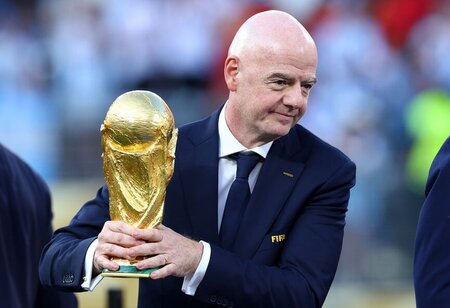
UEFA boycott threats have plunged world football's governing body into crisis, after Europe's 55 member associations unanimously voted to boycott future FIFA World Cups in response to FIFA's plan to inject private equity money into its competitions.
FIFA, however, did not back down. In a Thursday night statement, the sport's global governing body reaffirmed its intent to move forward with the consultation process on its FIFA Forward Enterprise (FFE) proposal, blaming "erroneous" media reporting for the backlash and insisting that "nobody is selling football."
What Sparked the UEFA Boycott
The dispute stems from FIFA and announcement of President Gianni Infantino earlier this week of plans to create a separate subsidiary - backed by private equity investment - that would control the commercial and operational rights to one of the world's biggest sporting events. Roughly 20% of the FFE subsidiary would be sold to private investors, with the main proposed backer being Thrive Eternal, a group headed by Joshua Kushner.
UEFA said the "soul and governance" of football are under threat, declaring in a statement that it would "never lend this model our legitimacy" and that no UEFA national teams would compete in any FIFA competition as long as the proposal remains active.
The boycott, if it holds, would keep reigning World Cup champion Spain, along with semifinalists France and England, out of the 2030 men's World Cup. It would also extend to the women's game, potentially sidelining Spain and other top European sides from the 2027 Women's World Cup in Brazil.
FIFA pushed back, arguing that no single entity can claim to represent all 211 of its member associations and that each should have the democratic right to review the proposal independently.
Also Read: FIFA's 20 Bn Commercial Subsidiary Plan Sparks UEFA Backlash
Other Confederations Voice Concern
Other voices have joined UEFA in backing up this position. The governing body of CONCACAF, the North and Central America and Caribbean body, expressed “deep concerns” over the absence of due process, but did not call for a boycott. The Asian Football Confederation president decried the lack of consultation by FIFA as "totally unacceptable" while Oceania's president stated that the situation would be discussed by its executive committee in August.
The Football Association of England said it was "shoulder to shoulder" with its European partners and UK Sport Minister Lisa Nandy supported the boycott as a "principled decision" saying "Football is for fans, not investors.
Those who are against the FFE idea worry that private interest driven by profit-making may be able to convince FIFA to increase the size of the tournaments or the number of World Cup events, which may be detrimental to the welfare of players as well as domestic leagues and continental competitions.
UEFA's 55 football associations, despite accounting for some 26% of FIFA membership, have more influence than they deserve to have in football, with European clubs and national teams topping both the men's and women's rankings.
Now it is up to other confederations to follow UEFA's example to lift the ban - including South America's UFUBA BOYCOTT - and whether European countries will respect the boycott at the next big FIFA tournament, the Under-20 Women's World Cup in Poland from September 5.
Current Issue
.jpg)
🍪 Do you like Cookies?
We use cookies to ensure you get the best experience on our website. Read more...